 CrowdWisers™
August charts and Fed hike ?3
19:06 17-Sep-26
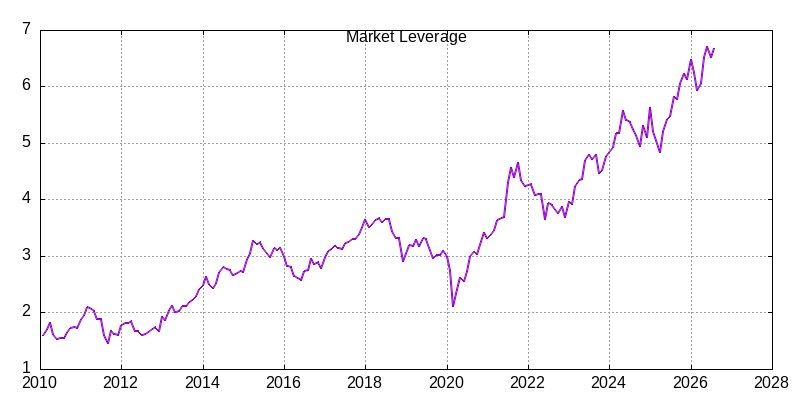 Market
leverage for August rebounded almost
to recent record levels as money mostly flowed into margin
accounts rather than worker retirement savings. I see this as
indicative of further pressure on the middle class. However, if
labor and real estate markets remain frozen, then market indexes
should only be impacted when and if the K-shaped economy gets to
the point where suffering expands to retail sales.
Pending Home Sales rose 0.3% in August, which was two tenths less than forecast, and still depressed. So, maybe a new found focus on corrupt trading following the midterms could be a catalyst, because I am beginning to find it completely plausible that political insiders are a contributing factor to how persistent and high market leverage has become. In the meantime, the market is back to ignoring the Fed along with the rest of government, as expected by CrowdWisers coverage below, since none of them have anything even trustworthy let alone predictively insightful to say any more.
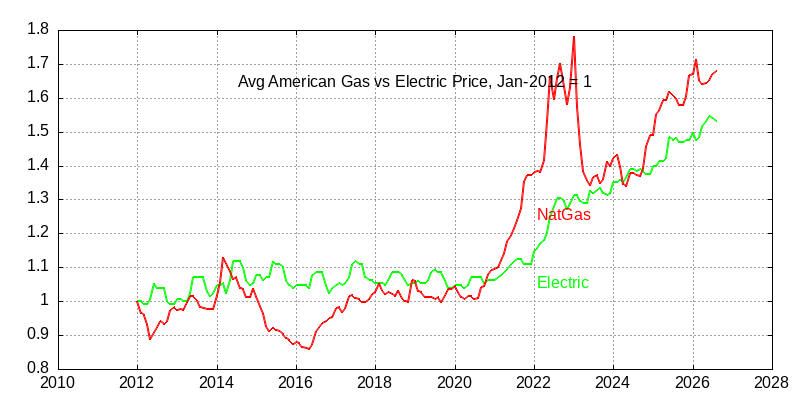 For the rest of us, American prices for natural
gas rose yet again, threatening to eclipse even typical winter
levels, while those for electricity edged
back down a little.
On 9/16/26 2:26 PM, Esekla wrote:
The Fed confirmed the market expectation for a quarter point hike with a very brief statement on a unanimous vote. Other than that, it simply claims all is well and that this will help us get back to target sooner. However, the dotplot in the SEP now shows consensus for one or two more hikes before 2027 is done and the committee gets back to cutting rates. I will monitor the press conference and comment if Max Headroom has anything even more incredible to say. In the meantime, though this move was priced in, this should still be vaguely negative for debt-fueled equity indexes.
On 9/15/26 9:38 AM, Esekla wrote:
Traded yield on ten-year T-Notes rose above 5% this morning, which is the highest since two spikes to 5.2% in the lead up to the 2008 crisis. That said, there is nothing particularly special about the 5% threshold. It is merely a psychological threshold that seemed worth mentioning. For what it's worth, the yield was routinely much higher pre-2000, topping out just above 8% in late 1994. Though the stock market was mostly unaffected by bond market carnage, it is commonly accepted that subsequent "soft landing" rate cuts paved the way for the dot com crash. This is why I historically have not tracked treasury yields at all, preferring currencies as a better real time indicator. Consequently, for now, I'll only reiterate that the path going forward for stock markets is dependent on the mid-terms, followed by Fed actions resulting from Warsh's task forces, but it will be interesting to see if Max Headroom is as gung ho as ever on AI spending in tomorrow's press conference.